The Missing Layer
On belonging, translation, and the mechanics that make vision land.

THE MOMENT
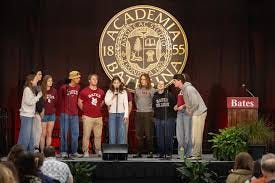
This weekend I took my daughter to admitted students day at Bates College where she’ll be heading to in the fall. The event had a lovely name: Bates Beginnings.
And it is, in a way. But it’s also a closing event. Months, sometimes years of courting. Campus visits, interviews, financial aid negotiations, the agonizing wait. And now one carefully choreographed day designed to make sure no one wakes up the next morning with second thoughts.
I’ve spent my career in people and culture. I recognized the playbook immediately.
The school pulled out all the stops: welcome banners, students chanting across the quad, an a cappella performance that was impressive even to my tone-deaf ears, branded totes, a discount at the university store (we are now college-branded for the foreseeable future), and a cafeteria that has won awards, which is a lot to say about a higher ed cafeteria, and yet the pizza slice and chocolate pudding I had were worth every calorie and every year of regression to my college self.
But what struck me most wasn’t the programming. It was the community that formed almost instantly. A handful of kids from her school had also been accepted. They found each other within minutes. The parents, whose only common ground was being loving and quietly willing it all to work out found each other too. By lunch in that award-winning cafeteria, we felt like friends who’d known each other for years.
We met that morning.
There’s something about communal experience that collapses time. Shared schedule, shared meals, shared uncertainty. The kids were kind, curious, and generous with each other. The parents were doting. And that builds a bond in itself.
I thought about work the whole drive home.
WHAT IT REVEALED
I’m a big fan of Chief, a membership organization built for senior women leaders whose operating philosophy is being member obsessed. Every touchpoint, every event, every communication is designed around one question: does this make our members feel valued, connected, and growing?
That question has stayed with me. Because what Bates was doing — underneath all the chanting and the tote bags and the award-winning cafeteria — was exactly that. They weren’t just welcoming students and their families. They were making sure no one woke up the next morning with second thoughts. Confirming the decision. Answering the question every new joiner, every admitted student, every person who just said yes to something scary is quietly asking: did I make the right call?
We talk a lot in people and culture functions about candidate experience and onboarding. We design first days with intention — the welcome message, the swag, the lunch with the team. And that matters. But belonging, connection and growth isn’t a Day 1 event. It’s an every-day opportunity.
The harder work comes after the tote bag (or t-shirts, sweatshirts, whatever your welcome swag of choice may be) is gathering dust and the novelty has worn off. When someone is frustrated, or frustrating. When a senior leader needs to hear something they don’t want to. When a manager needs coaching they didn’t ask for, or a team member needs redirection delivered with enough clarity and care that they metabolize it. That’s where trust is really built or lost. Not in the welcome event, in the thousand smaller moments after it.
Kindness and generosity are the mechanisms. They’re how people move toward better behavior rather than away from you.
WHAT I PRACTICED
The reframe that’s been most useful for me: experience obsession as a posture, not a program.
Not just at the offer stage. At every inflection point in the employee lifecycle — the first day, the first promotion, the first time something goes wrong and someone needs to know where to turn. The question isn’t only what we’re delivering. It’s whether the person on the other end feels it.
Which brought me to something I’ve been sitting with more deliberately lately. We tend to think about organizational leadership in binaries: visionaries and implementers. The people who set direction and the people who execute it. But there’s a third layer we don’t talk about enough.
The translator.
The translator is the leader, often a people leader, often a manager, or the individual contributor whose job title doesn’t sound like “strategy”, who sits between ambition and action and converts one into the other. Who takes the bold move and figures out the subtle mechanics that make it land. Who understands that the relationship between humanity and performance is structural.
Bates didn’t create belonging through the bold decision to host an event. They did it through the communal lunch. The housing tours that gave the kids something concrete to think about together. The a cappella group that gave everyone permission to feel a sense of nostalgia even before they’d started. None of those are the vision. They’re the translation of it.
That’s the work. The onboarding plan that makes a new executive feel set up rather than dropped in. The coaching conversation that redirects without alienating. The policy rollout that lands as clarity and shared responsibility rather than compliance. The manager who makes change feel like Tuesday instead of a crisis.
Without this layer, even the best strategies stall between intent and execution. The vision is clear. The plan is sound. And nothing moves because no one translated it into something people could feel and act on.
WHAT I’M STILL LEARNING
That I fall short of this more than I’d like to admit.
The translator role requires a kind of sustained attentiveness that doesn’t always come naturally when the list is long and the pace is relentless. It’s easier to rally than to regulate. Easier to cast vision than to sit in the discomfort of the gap between where we are and where we’re going.
I’m still learning to notice when I’m performing steadiness instead of offering it. When I’m inspiring instead of translating. When what someone needs from me isn’t the destination but the acknowledgment that the road is hard, and a next right step they can take.
The determining factor at Bates Beginnings was never the bold move. It was the subtle mechanics that allowed the bold move to be metabolized, embraced, and translated into action. That’s true at Bates on a Friday in April. And it’s true in every organization trying to move people somewhere new.
The translator is the difference. And most of the time, no one gives them the recognition, a framework, or even a name for what they do.
A QUESTION
Where in your work right now are you the translator? And what does the person on the other side need from you not to comply, but to want to move?
Still practicing. Always.
— Daisy
Work y Más is free. If this resonated, the best thing you can do is share it with a colleague, leader or friend who needs it this week.
And if we haven’t met yet — I’m Daisy. Global Chief People Officer, keynote speaker, and author of Burnt Out to Lit Up and Inclusion Revolution. I write here about work, careers and leadership as it’s lived, while it’s still unfolding.
📗 Get the books → [link] 🎤 Book me to speak → laura@freshspeakers.com ✉️ Read the archive → [link]