The Nod
What It Costs. What It Builds.

THE MOMENT
Seven kids in a pre-prom photo. All of them kids of color. All of them my daughter’s people. In a private school in New York City, that doesn’t happen by accident.
Watching them pile onto each other for photos, finish each other’s sentences, already mid-inside-joke before I could follow. I recognized something in it. They’d found their people. I knew exactly what that meant.
Early in my career, a well-meaning black executive assistant appeared at my cubicle one afternoon, leaned in with a lowered voice, and said something I’ve never forgotten: stop having lunch with so many black and brown people. That’s not how you move up here.
She meant it as a kindness. And I resented her for it.
I ignored her. Defiantly. That principled stubbornness has always been me for better and sometimes for worse.
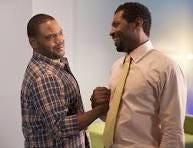
And in the years that followed, across board rooms and all-hands where my colleagues of color and I could scan the room in seconds and count ourselves on one hand — we nodded — a small, specific acknowledgment. I see you. You’re not alone. We’re here.
The nod is not just a greeting. It is a whole conversation, and for some, years of accumulated indignities compressed into a single gesture. There's a whole Black-ish episode built around it — who gives it, who doesn't, what it means when a younger generation stops recognizing it. Dre says it plainly: “the nod is the internationally accepted, yet unspoken sign of acknowledgement of black folks around the world.” I remember smiling widely and nodding at my screen when I saw that episode and wanting to thank every writer in that room. And I think about that episode every time the nod still finds me — across a boardroom, a conference hall, a crowded reception. It still happens.
If you’re lucky, the nod becomes the beginning of friendships that see you through the next job, the next hard room, the next time you’re the only one.
WHAT IT REVEALED
The executive assistant wasn’t wrong that visibility has consequences. She’d learned that lesson somewhere, too, probably the hard way. What she couldn’t see was that the connections she was warning me away from would not be a liability. They would become my lifeline. And that the career I went on to build, what those nods meant and what they built, became the purpose of my work.
Those lunches were where I could exhale. Where I didn’t have to explain the exhaustion of being the only one, or the impossible math of needing to be excellent enough to get noticed while knowing that getting noticed might be the very thing that got you dismissed.
The nod exists because it has to. It fills the space institutions haven’t yet built.
There’s data underneath this. Harvard economist David Deming has shown that the labor market has been rewarding social skills — trust, connection, human judgment — at an accelerating rate for decades. What the nod represents is exactly that: the relationship work that no policy can create. The quiet infrastructure some of us have been building our entire careers. These days, when we have to fight harder for hard-won rights, agency, safety, and dignity, the nod is how we refuse to just survive.
WHAT I PRACTICED
I kept having lunch with my colleagues. I kept nodding. I kept building the relationships that the advice said would hold me back and I built my career on them.
I’ve never been good at being told who’s worthy. Nor to be quiet about it. This was not simply defiance but rather knowing what I needed.
WHAT I’M STILL LEARNING
Something shifted when I became a senior leader.
The nod didn’t stop, but its direction changed. Now I’m often the one others look to. The presence in the room that tells someone else, ‘you can be here too.‘ That holds particular weight with women of color. They see it. I feel it. That’s a different kind of weight, a responsibility I don’t take lightly.
What I’ve learned and am still learning is that the answer to that weight isn’t to carry it quietly. It’s to build bigger tables. Share my story - our shared stories. Open doors wider. Make the room one where the nod eventually becomes unnecessary because everyone already knows they belong.
I’m not there yet. Many of us are not either. But that’s where I’m aiming.
A QUESTION
Who gave you the nod when you needed it? And who are you giving it to now?
Still practicing. Always. — Daisy
——— Work y Más is free. If this resonated, the best thing you can do is share it with one leader who needs it this week. And if we haven’t met yet — I’m Daisy. Global CPO, keynote speaker, and author of Burnt Out to Lit Up and Inclusion Revolution. I write here from inside the work, the leadership, the practice, while it’s still happening.
📗 Get the books → [link]
🎤 Book me to speak → laura@freshspeakers.com
✉️ Read the archive → [link]